
Precision-Ground Slitting Blades for Consistent Performance
Precision-Ground Slitting Blades for Consistent Performance
Table of Contents
- Executive Summary: The Critical Edge in Modern Manufacturing
- Slitting Blade Fundamentals: Types, Mechanisms, and Applications
- The Precision-Grinding Advantage: Engineering the Perfect Edge
- Material Science Behind Durable Slitting Blades
- Application Deep Dive: Metal, Paper, and Film Processing
- ShengAo's Precision-Ground Slitting Blade Capabilities
- Selection Guide and Operational Best Practices
- The Future of Slitting Technology and Conclusion
- About ShengAo Industrial Blades
Executive Summary: The Critical Edge in Modern Manufacturing
In the high-stakes world of industrial converting, where microns matter and downtime costs thousands, the choice of cutting tool is not merely a purchase—it's a strategic decision. Precision-ground slitting blades stand at the heart of efficient metal, paper, and film processing, transforming master rolls into precise, burr-free strips that feed global supply chains. Unlike conventionally ground blades, precision-ground variants are engineered through advanced CNC processes to achieve exceptional dimensional accuracy, perfect edge geometry, and mirror-like surface finishes. This results in consistent, high-quality cuts, extended blade lifespan, and the ability to operate at higher speeds with reduced energy consumption. For manufacturers, this translates directly to lower cost-per-cut, superior product quality, and enhanced operational reliability. This comprehensive guide delves into the engineering, application, and selection of these critical tools, highlighting how innovators like ShengAo are setting new standards for performance in the global slitting industry.
1. Slitting Blade Fundamentals: Types, Mechanisms, and Applications
Slitting Blades are specialized industrial cutting tools designed to longitudinally divide large rolls of material—known as master rolls or jumbo rolls—into multiple narrower strips. This core converting process is fundamental to industries ranging from packaging and printing to metal stamping and electronics. The fundamental goal is to achieve a clean, precise, and consistent cut without compromising the edge quality of the material, which could lead to downstream processing issues or product failure.
Core Types and Cutting Mechanisms
There are three primary slitting methods, each employing a distinct blade type and mechanism:
1. Razor or Crush Slitting: This method uses a single, extremely sharp razor blade pressed directly against a hardened steel anvil roll. The material is "crushed" and torn against the anvil. It's a simple, low-cost method but typically produces a lower-quality edge with slight burrs, best suited for non-critical materials like some tissues, soft plastics, and paper.
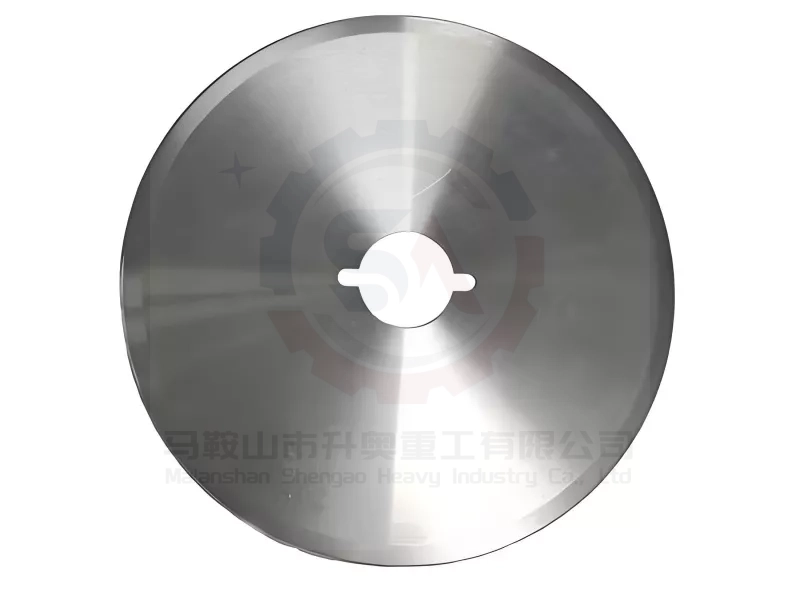
2. Shear Slitting: This is the most common method for high-precision, high-speed applications. It involves two overlapping circular slitting blades working in tandem like scissors. The top blade is mounted on the top shaft, and the bottom blade is on the bottom shaft. The precise overlap and side clearance between them create a true shearing action, resulting in a clean, square cut with minimal burr. Shear slitting is ideal for metals, films, laminates, and papers.
3. Score (Wrap) Slitting: Here, a single sharp circular blade penetrates partially into the material, which is wrapped around a hardened rubber or composite roller. The cutting action is a combination of penetration and tearing. It's often used for thicker, more fibrous materials like cardboard, rubber, or certain textiles where a true shear cut is difficult to achieve.
Key Components Influencing Performance
Beyond the cutting type, several blade components are critical:
- Diameter and Bore: Must match the slitter arbor size and provide sufficient clearance for the material thickness.
- Thickness: Affects rigidity and the width of the cut (kerf). Thinner blades reduce material waste but must be robust enough to resist deflection.
- Hardness (HRC): Measured on the Rockwell C scale, hardness determines wear resistance. Slitting blades for abrasive materials like fiberglass or prepreg often require HRC 60+.
- Tolerances: Precision-ground blades boast ultra-tight tolerances on thickness (e.g., ±0.005mm), parallelism, and concentricity, ensuring consistent performance across the entire blade set.
2. The Precision-Grinding Advantage: Engineering the Perfect Edge
The term "precision-ground" is the key differentiator between a standard blade and a high-performance tool. It refers to a multi-step manufacturing process centered on Computer Numerical Control (CNC) grinding technology, which offers unparalleled accuracy, repeatability, and control over the final blade geometry.
CNC Grinding Technology and Tolerance Control
While conventional grinding relies heavily on operator skill, CNC grinding uses pre-programmed software to control the movement of diamond or CBN grinding wheels. This automation eliminates human error and ensures every blade in a batch is identical. Key tolerances achieved through this process include:
- Thickness Consistency: Critical for maintaining uniform strip width. CNC grinding can hold thickness tolerances within ±0.0025mm to ±0.0125mm.
- Parallelism: Ensures both faces of the blade are perfectly parallel, preventing wobble and uneven wear during high-speed rotation.
- Concentricity: Guarantees the blade's cutting edge runs true to its center bore, eliminating vibration and promoting smooth, quiet operation.
A primary advantage of sourcing from a specialist manufacturer like ShengAo is access to this level of engineered precision, which directly correlates to longer blade life and fewer production line adjustments.
Edge Geometry and Sharpness Angles
The profile of the cutting edge is not a simple V-shape. Precision grinding allows for the creation of specific edge geometries optimized for the material being cut:
- Double-Bevel (Dual-Angle): The most common for shear slitting blades. Features a primary bevel (e.g., 30°) for strength and a secondary micro-bevel (e.g., 35-45°) for sharpness. This balances edge durability with cutting aggression.
- Single-Bevel (Chisel Edge): Used in specific score or razor slitting applications.
- Radius or Hollow Ground: A concave edge profile that reduces friction and cutting force, excellent for soft, sticky materials like certain plastics or nonwovens.
The precise angle—whether 12°, 14°, 16°, or other—is carefully selected. A shallower angle is sharper but less durable, ideal for thin films. A steeper angle is stronger for abrasive materials like metal or carbon fiber.
Surface Finish and Burr Elimination
A mirror-finish on the blade's side faces and edge is not just for aesthetics. A smooth, polished surface minimizes friction as the material passes the blade, reducing heat buildup and preventing material adhesion (e.g., melted plastic sticking to the blade). More importantly, a flawless, sharp edge initiated by precision grinding is the single most important factor in achieving a burr-free cut. Any microscopic imperfection in the edge will tear or deform the material rather than cleanly shearing it, creating a burr that can jam machinery, reduce product quality, or pose a safety hazard.
3. Material Science Behind Durable Slitting Blades
The base material of a slitting blade determines its fundamental capabilities: hardness, toughness, wear resistance, and corrosion resistance. Selecting the correct material is paramount for application success.
High-Speed Steel (HSS) for Versatility
HSS, such as M2 or M35, is a workhorse material offering an excellent balance of properties. It can be hardened to HRC 62-65, retains its hardness at elevated temperatures (hence "high-speed"), and is relatively tough to resist chipping. HSS blades are cost-effective and perform well on a wide range of materials including paper, cardboard, textiles, and some plastics. They are a common choice for many blades for recycling operations where a variety of materials might be encountered.
Tool Steel Alloys (D2, Cr12MoV, SKD-11)
For more demanding applications, high-carbon, high-chromium tool steels are preferred.
- D2 Shredder Blades / D2 Tool Steel: Known as a "semi-stainless" air-hardening steel, D2 offers exceptional wear resistance (HRC 58-62) due to its high chromium and carbon content. It is ideal for slitting abrasive materials like coated papers, laminates, and certain plastics. Its resistance to wear makes it a candidate for long-running jobs.
- Cr12MoV Blade: A similar cold-work die steel from the Chinese standard, offering high hardness, good toughness, and minimal deformation after heat treatment, making it suitable for precise slitting blades.
- SKD-11 Shredder Blades / SKD11 Tool Steel: The Japanese JIS equivalent of D2. It is renowned for its uniform hardness, fine microstructure, and excellent polishability. SKD11 blades are often the premium choice for slitting high-tech films, electronics materials, and other applications where a perfect edge finish is non-negotiable.
Tungsten Carbide and Advanced Ceramics
For the ultimate in wear resistance, tungsten carbide is unbeatable. Cemented carbide blades, often with a steel body for toughness and a carbide tip or ring for cutting, can last 10-50 times longer than steel blades when processing highly abrasive materials like fiberglass, carbon fiber prepreg, aramid papers, or magnetic tape.
- Tungsten Carbide Circular Blades: These are essential in industries like aerospace and electronics where material cost is extremely high, and any edge defect is catastrophic.
- Ceramic Blades: Used in niche applications where extreme chemical inertness or heat resistance is required, though they are more brittle than carbide.
Specialized Coatings and Surface Treatments
To further enhance performance, blade surfaces can be treated with advanced thin-film coatings applied via Physical Vapor Deposition (PVD):
- Titanium Nitride (TiN): Gold-colored coating offering increased surface hardness and reduced friction.
- Titanium Carbonitride (TiCN): Darker gray, offers even higher hardness and wear resistance than TiN.
- Chromium Nitride (CrN): Silver-colored, provides excellent corrosion resistance and is good for processing corrosive materials.
- Diamond-Like Carbon (DLC): Provides an ultra-smooth, low-friction surface, ideal for sticky or adhesive materials.
These coatings act as a barrier, reducing heat transfer to the blade substrate, minimizing material adhesion, and significantly extending time between sharpening.
4. Application Deep Dive: Metal, Paper, and Film Processing
The true test of a slitting blade is its performance on the production floor. Different materials present unique challenges that demand specific blade solutions.
Metal Sheet and Foil Slitting
Slitting thin steel, aluminum, copper, or brass requires blades with extreme hardness and precise geometry to prevent burr formation. A burr on metal can hinder welding, cause coating failures, or injure handlers. For foils down to 0.01mm, blade sharpness and concentricity are paramount. ShengAo provides blades made from premium tool steels or carbide, precision-ground to razor-sharp edges with polished faces to prevent metal pickup. The correct clearance angle is critical to prevent the foil from wrapping around the blade.
Paper, Cardboard, and Converting
This sector ranges from newsprint to heavyweight coated board. Abrasive fillers (like clay in magazine paper) and adhesives in laminates cause rapid blade wear. Long life shredder blades principles apply here—using wear-resistant steels like D2 or SKD11 with appropriate edge angles ensures consistent cut quality and reduces changeover frequency. For corrugated cardboard, score slitting with specially hardened blades is common. Clean cutting is also vital in the papermaking and packaging industries to prevent dust, which can contaminate products and machinery.
Plastic Film and Flexible Packaging
Polyethylene (PE), Polypropylene (PP), Polyester (PET), and laminates are core materials in flexible packaging. Challenges include: - Burr Formation: A soft burr or "angel hair" can cause sealing problems on packaging machines. - Adhesion/Melting: Friction heat can melt certain films, causing them to stick to the blade and gunk up the slitter. - Elasticity: Stretchy films can deform rather than cut cleanly. Precision-ground slitting blades with polished, radiused edges and sometimes non-stick coatings (like CrN or DLC) are the solution. Sharp, consistent edges make a clean cut before the material can stretch or melt.
Specialized Materials (Composites, Nonwovens, Electronics)
- Composites & Nonwovens: Materials like fiberglass, carbon fiber, or geotextiles are highly abrasive. Tungsten carbide-tipped blades are almost mandatory for economic viability, as steel blades would blunt in minutes. - Electronic Materials: Slitting flexible printed circuits (FPCs), battery electrodes, or EMI shielding films requires absolute precision and cleanliness. Any particle generated from blade wear could short-circuit a device. Ultra-hard, polished blades made from materials like SKD11 or solid carbide are used in controlled environments. - Recycling Streams: Blades for recycling mixed or contaminated plastic film streams need to balance wear resistance with toughness to handle occasional contaminants.
5. ShengAo's Precision-Ground Slitting Blade Capabilities
As a leading manufacturer, ShengAo leverages advanced engineering and stringent quality control to produce slitting blades that meet the most demanding global standards.
Product Portfolio Overview
ShengAo offers a comprehensive range of slitting blades tailored to various industries: - Shear Slitting Blades (Male & Female Sets): Available in diameters from 50mm to 600mm+, in HSS, D2, Cr12MoV, and SKD11. - Score Slitting Blades: Designed for thicker materials with specific edge profiles. - Razor Blades & Anvil Rings: For crush slitting applications. - Custom Geometry Blades: For specialized machinery or unique material challenges. Our expertise extends to related cutting tools, such as robust plastic granulator blades for size reduction in recycling, which share similar material science principles.

Precision Manufacturing Process
The journey of a ShengAo blade ensures top-tier quality: 1. Material Selection: Premium steel billets are sourced and certified. 2. CNC Machining & Grinding: Blanks are machined to near-net shape before undergoing critical CNC grinding on state-of-the-art German and Japanese grinders. This stage establishes the perfect geometry, thickness, and concentricity. 3. Heat Treatment: Using computer-controlled vacuum furnaces, blades are hardened and tempered to achieve the exact, uniform hardness required (e.g., HRC 58-62 for D2). This prevents warping and ensures consistent performance. 4. Final Precision Grinding & Sharpening: After heat treatment, a final CNC grinding pass creates the exact edge angle and a razor-sharp, burr-free cutting edge. 5. Polishing & Coating (Optional): Blades are polished to a specified surface finish. PVD coatings are applied if requested. 6. Rigorous Inspection: Every blade is checked for hardness (with calibrated testers), dimensions (with micrometers and CMMs), and edge quality (often under microscopes).
Quality Assurance and Customization
ShengAo operates under an ISO 9001 quality management system. Beyond standard offerings, we specialize in Custom shredder blades OEM services. This capability is directly transferable to slitting blades. We can reverse-engineer existing blades, work from technical drawings, or collaborate with customers to design a solution for a new application. Whether you need a specific bore size, an unusual diameter-thickness ratio, or a proprietary edge geometry, our engineering team can deliver. This makes us an ideal partner for both OEM shredder blades for machinery manufacturers and end-users with unique needs.
6. Selection Guide and Operational Best Practices
Choosing and maintaining the right slitting blade is crucial for optimizing performance and total cost of ownership.
Choosing the Right Blade for Your Material and Machine
Consider this checklist: - Material Type: Is it abrasive, elastic, adhesive, or corrosive? Match material to blade material (e.g., carbide for abrasives, coated blades for stickiness). - Material Thickness: Thicker materials require stronger (steeper angle) edges. - Slitting Method: Shear, score, or razor? This dictates the blade type. - Machine Specifications: Arbor size (bore), maximum blade diameter, and allowable side force. - Production Requirements: Speed, volume, and required edge quality. High-speed, long runs justify investment in premium materials like carbide. When in doubt, consult with the experts. Providing a sample of your material to a manufacturer like ShengAo can yield the best recommendation.
Installation, Maintenance, and Sharpening
- Installation: Always ensure blades, spacers, and arbors are clean and free of nicks. Follow the machine manual for proper alignment, overlap, and clearance settings. Incorrect setup will ruin even the best blade.
- In-Service Care: Monitor cut quality. A gradual increase in burr indicates normal wear. A sudden change may signal blade damage, misalignment, or a material change.
- Sharpening: Precision-ground blades can be re-sharpened multiple times by a specialist regrinding service that understands the original geometry. Never sharpen on a standard bench grinder—this will destroy the precise edge and heat-treat, ruining the blade. Proper resharpening restores performance and is a key part of a long life shredder blades philosophy.
Troubleshooting Common Slitting Issues
- Burrs: Usually caused by a dull blade, incorrect blade clearance/overlap, or blade/arbor runout. Check sharpness and machine setup first.
- Material Wrapping: Can be caused by excessive blade penetration, too sharp an edge angle, or lack of blade face polish.
- Short Blade Life: Likely a material-to-blade hardness mismatch. Consider upgrading to a more wear-resistant steel (SKD11) or carbide.
- Poor Strip Width Control: Could be due to blade thickness variation (emphasizing the need for precision grinding), worn spacers, or machine tension issues.
7. The Future of Slitting Technology and Conclusion
Industry 4.0 and Smart Blade Integration
The future lies in connectivity and data. We are moving towards "smart" slitting systems where blades equipped with RFID tags or sensors can communicate their identity, service history, and even real-time wear data to the machine controller. This enables predictive maintenance, automatic parameter adjustment for optimal cut quality, and seamless inventory management. While the blade itself remains a physical marvel of metallurgy, its integration into the digital thread of production will unlock new levels of efficiency.
Sustainable Materials and Circular Economy
As industries push for sustainability, blade manufacturers are responding. This includes: - Developing blades optimized for cutting new, bio-based, or recycled materials which often have different cutting characteristics. - Offering blade restoration and blade restoration solutions to extend tool life indefinitely, reducing waste. - Utilizing more environmentally friendly coatings and processes.
Conclusion: Investing in Precision for Peak Performance
In conclusion, precision-ground slitting blades are far from a commodity. They are a high-performance engineered component that directly impacts product quality, production speed, and operational cost. The investment in a correctly specified, precision-manufactured blade from a reputable supplier like ShengAo pays dividends through reduced waste, less downtime, and superior finished products. By understanding the interplay between grinding technology, material science, and application demands, manufacturers can make informed decisions that sharpen their competitive edge. Whether you are processing delicate battery films, robust steel coil, or versatile packaging materials, the principle remains: consistent, burr-free performance starts with a precision-ground edge.
About ShengAo Industrial Blades
ShengAo is a leading manufacturer of high-performance industrial cutting blades, specializing in precision-ground slitter blades, shredder blades, granulator knives, and custom cutting solutions. With a steadfast commitment to quality, innovation, and customer partnership, we engineer tools that meet the most demanding standards for durability and precision in metal processing, paper converting, plastic recycling, and beyond. Our advanced CNC grinding, rigorous heat treatment, and comprehensive quality assurance ensure every blade delivers consistent, reliable performance.
Explore our full range of solutions and discover how our expertise can optimize your cutting operations:
- Industrial Shredder Blades for waste reduction
- Plastic Granulator Blades for recycling
- Circular Slitting Blades for converting
- Industry-Specific Applications
- OEM & Custom Blade Manufacturing
For inquiries and technical support:
Engineer Jack
Email: jack@shenaozg.com
Mobile/WhatsApp: +86 136 9673 1068
Address: Bowang town Songhua River road, Bowang District, Ma'anshan City, Anhui Province, China