
How to Select Plastic Granulator Blades to Boost Efficiency and Cut Costs
How to Select Plastic Granulator Blades to Boost Efficiency and Cut Costs
Table of Contents
Choosing the wrong plastic granulator blades can cripple your recycling or production line, leading to inconsistent flake size, excessive downtime, and soaring operational costs. The right blades are the heart of your granulator, directly dictating throughput quality, energy consumption, and your bottom line. This guide cuts through the complexity, providing actionable insights on selecting blade materials, optimizing geometry, and implementing maintenance strategies. You'll learn how to maximize throughput, dramatically reduce unplanned downtime, and extend blade life, ensuring your operation runs at peak efficiency and profitability.
1. Optimize Blade Material for Your Plastic Type
The foundation of blade performance and longevity is the material. Not all plastics are created equal, and your blade steel must be chosen to match the specific challenges of your feedstock. Using a blade designed for soft film on abrasive materials like glass-filled nylon will lead to rapid dulling and frequent replacements.
For common plastics, here is a material selection guide:
| Primary Plastic Type | Recommended Blade Material | Key Reason |
|---|---|---|
| PP/PE Film, LDPE, Soft Plastics | Premium Alloy Tool Steel (e.g., D2, SKD-11) | Offers an excellent balance of toughness and wear resistance for continuous, clean cutting of non-abrasive materials. |
| PET Bottles, ABS, PC, Engineering Plastics | Through-Hardened Tool Steel (HRC 58-62) | Provides superior hardness to maintain a sharp edge against semi-abrasive materials and prevent premature deformation. |
| Glass-Filled Plastics, Reinforced Composites | Carbide-Tipped or Tungsten Carbide Inserts | Delivers extreme wear resistance to withstand highly abrasive materials, offering the longest life in demanding applications. |
| Mixed or Unknown Streams | Surface-Treated/Coated Tool Steel (e.g., TiN, CrN) | Enhances base material performance with a hardened, low-friction coating that resists adhesion and reduces heat buildup. |
Tip: Always analyze your feed material. Contaminants like sand, dirt, or metal traces dramatically increase abrasiveness, necessitating a more robust material like tungsten carbide or specially hardened steel. For expert advice on matching materials to your stream, consult our detailed blade materials classification guide.
2. Select the Right Blade Geometry and Hardness
Material choice is only half the battle. The blade's geometry—its shape, cutting angle, and tooth design—determines how efficiently it grabs, cuts, and clears material. A mismatch here can cause poor feeding, high energy draw, and uneven particle size.
Scissor vs. Smash Cutting: A proper granulator blade is designed for a scissor-like shear cut between the rotor and bed knife. This is efficient and produces uniform granules. Ensure the cutting angle (hook angle) is optimized for your material; a steeper angle provides a more aggressive cut for thick parts, while a shallower angle is better for films and sheets.
Hardness & Toughness Balance: Hardness (measured in HRC) prevents the edge from rounding over. However, excessive hardness can make the blade brittle. For most plastic granulation, a hardness of HRC 58-62 provides the ideal compromise. Our plastic granulator blade materials page delves deeper into heat treatment processes that achieve this critical balance.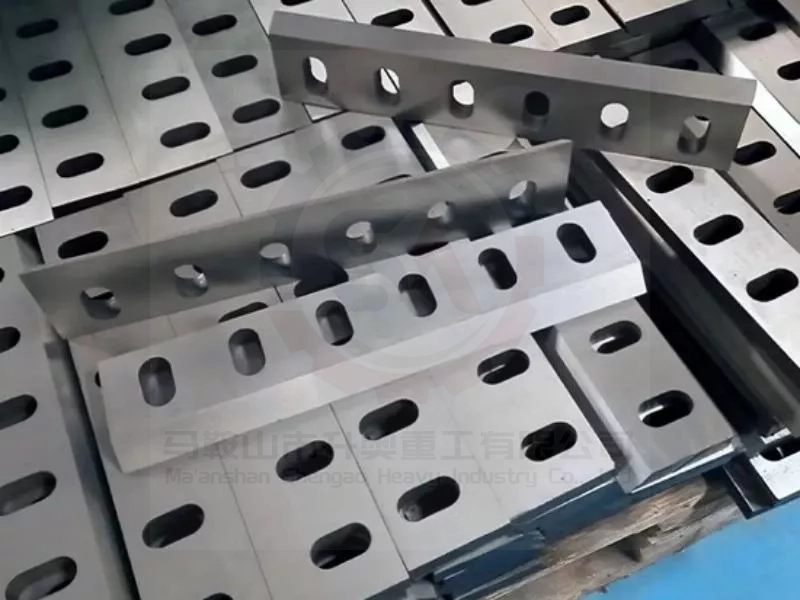
3. Prioritize Compatibility and Precision Fit
A blade that isn't perfectly matched to your machine is a liability. Even the best steel will underperform if the dimensions, mounting holes, and clearances are not exact.
Machine-Specific Dimensions: Granulator blades are not universal. You must know your machine's make, model, and the specific blade part number or precise measurements (length, width, height, hole diameter and spacing). Using an incorrect size can lead to catastrophic failure, damaging the rotor or the machine housing.
Precision Grinding & Alignment: The cutting edge must be ground to micron-level precision to ensure a perfect fit with the counter knife. Even a slight misalignment creates a gap that will tear plastic instead of cutting it, generating heat, fines, and excessive wear. At ShengAo, every blade undergoes precision grinding to guarantee optimal performance from the first hour of operation.
4. Implement Proactive Maintenance Strategies
Reactive maintenance—waiting for blades to fail—is the most expensive approach. Proactive strategies maximize uptime and control costs.
Regular Inspection & Rotation: Establish a schedule to inspect blades for edge wear, nicks, or damage. On rotors with multiple blades, regularly rotating them ensures even wear across all cutting edges, extending the overall set life.
Professional Sharpening vs. Replacement: High-quality blades can often be professionally sharpened multiple times. The key is to sharpen them before they are completely dull or damaged. Grinding away too much material shortens the blade's total lifespan. We offer guidance on when to sharpen versus replace to optimize your costs.
Bed Knife Attention: The bed knife (stationary knife) is just as critical as the rotor blades. Always inspect and maintain it in tandem with the rotor blades. A worn bed knife will render even new rotor blades ineffective.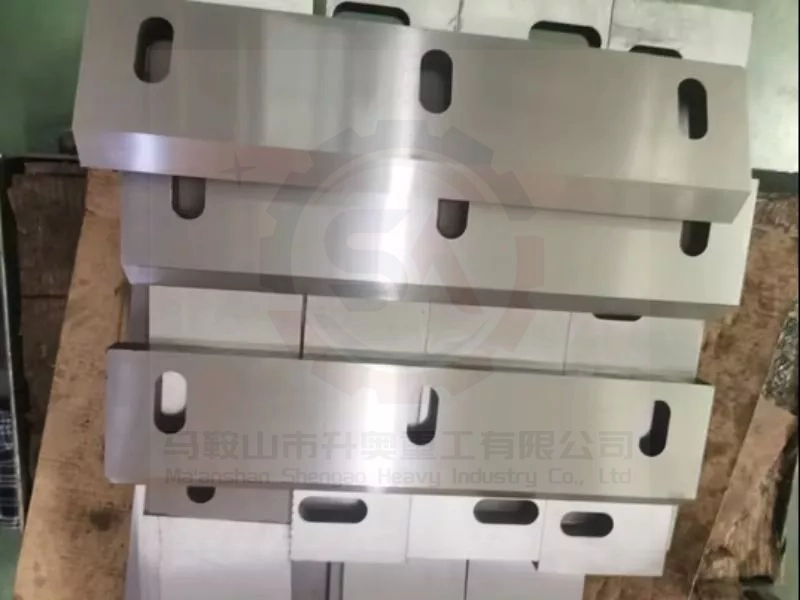
5. Evaluate Total Cost of Ownership, Not Just Price
The cheapest blade is often the most expensive in the long run. Evaluate blades based on Total Cost of Ownership (TCO), which includes purchase price, lifespan, maintenance frequency, and performance impact.
Lifespan & Throughput: A premium ShengAo granulator blade made from the correct material may cost 30% more but can last 300% longer and maintain consistent throughput throughout its life. Calculate the cost per operating hour or cost per ton of processed material for a true comparison.
Reduced Downtime: Every unscheduled blade change means lost production. High-quality, durable blades and a planned maintenance schedule minimize this costly downtime, keeping your line running and profitable.
Manufacturer Support: Choose a supplier like ShengAo that offers comprehensive technical support, reliable warranties, and consistent quality. Access to expert advice and readily available replacement blades is invaluable for maintaining continuous operations.
Final Thoughts
Selecting the optimal plastic granulator blades is a strategic decision that impacts every aspect of your operation's efficiency and cost structure. You can transform your granulation process by meticulously matching blade material to your plastic type, choosing the correct geometry, ensuring a perfect machine fit, adopting proactive maintenance, and analyzing total cost. The goal is not just to cut plastic but to cut costs and boost your output reliably. For a tailored recommendation for your specific machine and material stream, contact our ShengAo engineering team today.