
What Are the Key Advantages of Circular Blades in Industrial Cutting?
What Are the Key Advantages of Circular Blades in Industrial Cutting?
Table of Contents
Selecting the wrong cutting tool can cripple your production line with inconsistent results, frequent downtime, and high long-term costs. Understanding the core advantages of circular blades is crucial for optimizing any industrial cutting process. This article will detail how these blades deliver enhanced precision, remarkable efficiency, and inherent safety, making them the preferred choice for sectors from textiles and metal fabrication to food processing and packaging. You will learn why their design principles translate to tangible operational benefits and how to leverage them for maximum ROI.
1. Unmatched Versatility Across Industries
The fundamental design of the circular blade—a rotating disk with a sharpened edge—provides a unique combination of simplicity and effectiveness that adapts to a vast array of materials and machines. This versatility is their primary advantage, allowing for standardized cutting solutions across diverse production environments.
From delicate fabrics to tough alloys, the principle remains the same, but the execution is tailored. The blade's material, bevel geometry, and edge treatment are engineered for specific tasks. For instance, blades for slicing food products prioritize hygiene and a clean cut to preserve appearance, while those for metal slitting focus on heat resistance and maintaining hardness.
The following table illustrates this adaptability across key sectors:
| Industry | Primary Application | Key Blade Consideration | ShengAo Solution Example |
|---|---|---|---|
| Textiles & Nonwovens | Slitting rolls of fabric, cutting synthetic fibers. | Extreme sharpness to prevent fraying; specialized coatings to reduce adhesive build-up. | Precision-honed single-bevel blades for clean, non-raveling cuts. |
| Metal Processing | Slitting coils, trimming edges, cutting sheets. | High wear resistance and thermal stability. Often uses carbide-tipped or solid tungsten carbide blades. | Heavy-duty carbide slitters designed for continuous high-speed operation. |
| Food Processing | Slicing meats, cheeses, vegetables, baked goods. | Food-safe materials (stainless steel), easy-clean surfaces, and corrosion resistance. | Polished, sanitary stainless steel blades with custom edge geometries. |
| Packaging & Converting | Cutting films, plastics, paper, and laminates. | Razor-sharp edge for a burr-free cut; minimal friction to prevent material melt. | Custom-configured double-bevel blades for specific film grades. |
2. Superior Precision and Consistent Cut Quality
Circular blades excel in delivering accuracy and repeatability that other cutting methods struggle to match. The rotational cutting action provides a naturally stable and controlled shearing force.
The precision is engineered into the blade itself. Advanced manufacturing at ShengAo ensures perfect concentricity and a uniform cutting edge around the entire circumference. This eliminates variation in cut quality, which is critical when tolerances are measured in thousandths of an inch. The clean, shearing action of a sharp circular blade minimizes material deformation, producing smooth edges on plastics, straight cuts on fabrics, and precise slices on food products without crushing or tearing.
Furthermore, this consistent quality is maintained over long production runs. Unlike reciprocating blades or crush-cut methods, a properly maintained circular blade applies the same optimal force with each revolution, ensuring the ten-thousandth cut is as clean as the first. This reliability directly reduces material waste and costly rework.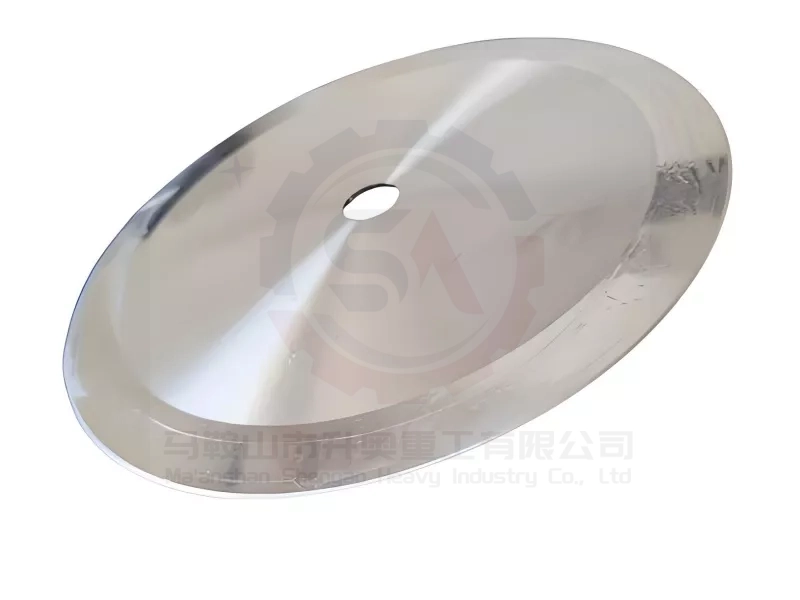
3. Enhanced Operational Efficiency and Productivity
The continuous rotary motion of circular blades is inherently efficient, enabling higher cutting speeds and smoother integration into automated production lines compared to stop-start cutting methods.
This design allows for significantly faster line speeds, directly boosting throughput. The cutting action is also more energy-efficient, as the motor maintains a constant rotational speed rather than constantly accelerating and decelerating. For high-volume operations like converting or slitting, this translates to lower power consumption per unit produced.
Efficiency is further enhanced by reduced downtime. Circular blades are typically easier and faster to change out during scheduled maintenance. Their robust construction and the availability of professional blade restoration services mean they can be re-sharpened multiple times, extending service life and minimizing the frequency of complete replacements. This predictability allows for better production planning and fewer unscheduled stops.
4. Inherent Safety and Robust Durability
Safety and longevity are built into the design philosophy of industrial circular blades. When properly installed and guarded, they offer a safer cutting solution with exceptional durability.
The enclosed, rotational path of the cutting edge is easier to shield effectively with machine guards, protecting operators from direct contact. The cutting force is directed downward and into the material feed, creating a more controlled and stable process less prone to grabbing or kicking back material compared to some straight blades.
Durability stems from the use of high-performance steels and carbides. These materials are engineered to resist abrasion, corrosion, and thermal fatigue. A high-quality circular blade from ShengAo is an investment that withstands the rigors of continuous operation. Its ability to be professionally re-sharpened restores it to like-new performance, ensuring you extract maximum value from the tool and achieve a lower total cost of ownership over its lifespan.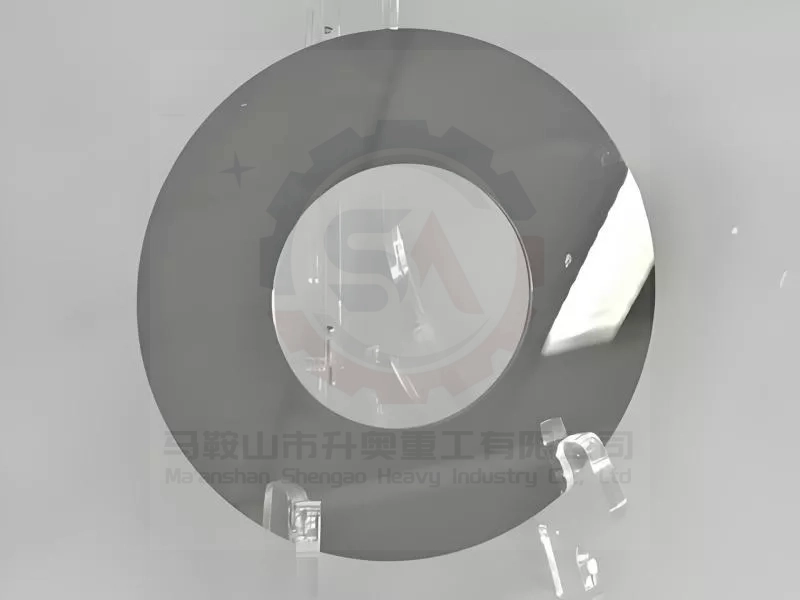
5. Choosing the Right Blade for Your Application
To fully capitalize on these advantages, selecting the correct circular blade specification is paramount. The "best" blade is the one perfectly matched to your material, machine, and desired cut quality.
Key selection criteria include:
- Material: Tool Steel, High-Speed Steel (HSS), or Tungsten Carbide. Carbide offers supreme wear resistance for abrasive materials.
- Geometry: Single-bevel (for cleaner shearing) or Double-bevel (for general-purpose cutting and durability).
- Edge Finish: Honed, polished, or coated edges to reduce friction and adhesion for specific materials like films or adhesives.
- Hardness & Toughness: A balance must be struck; harder edges stay sharp longer but can be more brittle.
Partnering with an expert manufacturer like ShengAo is critical. Our engineering team can analyze your application—considering material type, thickness, machine specs, and production speed—to recommend or custom-build a blade that optimizes all the inherent advantages of circular cutting technology for your unique operation.
Final Thoughts
Circular blades are not merely cutting tools; they are precision-engineered components that drive industrial efficiency, quality, and safety. Their versatility across industries, ability to deliver consistent precision, contribution to high productivity, and inherent durability make them an indispensable asset on the modern factory floor. By understanding these key advantages and investing in the correct blade specification for your needs, you unlock significant gains in output quality and operational cost-effectiveness. To explore how a tailored circular blade solution can transform your cutting process, contact the ShengAo experts today for a consultation.