
What Are the Essential Features to Look for in Plastic Granulator Blades
What Are the Essential Features to Look for in Plastic Granulator Blades
Table of Contents
1. The Foundation of Performance: Blade Material and Durability
The material from which your granulator blades are made is the primary determinant of their lifespan and wear resistance. Processing abrasive materials like glass-filled plastics, rubber, or contaminated waste streams demands blades that can withstand constant impact and friction. Standard carbon steel blades dull quickly, leading to increased motor load and poor cut quality. High-grade tool steels, such as D2, SKD11, or Cr12MoV, offer an excellent balance of hardness (typically HRC 58-62) and toughness, resisting deformation even under heavy loads. For the most extreme applications, such as processing engineering plastics or metals, blades tipped with tungsten carbide provide unmatched wear life. When evaluating durability, look for blades that undergo precise heat treatment and cryogenic processing to ensure consistent hardness throughout the material, preventing premature edge failure and maximizing intervals between sharpening.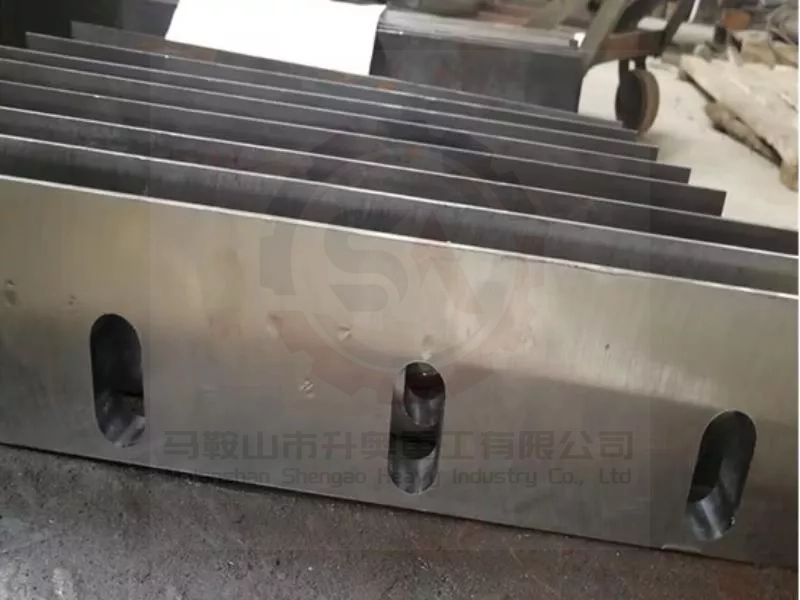
2. Cutting Geometry: The Key to Efficiency and Particle Size
A blade's geometry—its angle, shape, and cutting edge design—directly dictates how it interacts with the plastic material. An incorrectly profiled blade will tear rather than cut cleanly, generating excessive dust (fines) and consuming more energy. For general-purpose granulation, a standard flat blade with a 30-40° cutting angle may suffice. However, for tough, elastic materials like film or soft plastics, a serrated or toothed blade can help grip and initiate the cut, preventing the material from deflecting. For brittle plastics, a sharper, more acute angle delivers a clean fracture. The hook angle and clearance angles must also be optimized for your rotor type (open or closed) and screen size. Custom-engineered geometry ensures that each cut is performed with minimal force, producing a uniform particle size ideal for downstream processes like extrusion or injection molding, while significantly reducing energy draw per kilogram processed.
3. Precision Manufacturing for Consistent Output
Even the best material and geometry will fail if the blade is not manufactured to exacting tolerances. In a granulator, rotor blades and stationary bed knives work in tandem with a precise clearance. If blades are inconsistently ground—with variations in thickness, flatness, or edge straightness—the gap between them will fluctuate during rotation. This leads to uneven cutting, increased vibration, and accelerated wear on both the blades and the machine's bearings. High-quality plastic granulator blades are manufactured using CNC grinding centers that guarantee tolerances of +/- 0.01mm on critical dimensions. This precision ensures a consistent shear point throughout the entire cutting cycle, producing a uniform granulate with minimal fines and reducing mechanical stress on the drive train. Look for suppliers who employ advanced metrology to verify every blade's dimensions and edge quality before shipment.
4. Compatibility: Ensuring a Perfect Fit for Your Machine
A blade might be perfectly designed in isolation, but if it does not integrate seamlessly with your specific granulator model, its performance will be compromised. Critical factors include the blade's mounting hole pattern, thickness, length, and the rotor's rotational direction. Many recyclers face the challenge of finding replacement blades for older or foreign-made machines. Generic "universal" blades often require shimming or modifications, which can affect balance and clearance. The most reliable approach is to source blades engineered specifically for your make and model. ShengAo specializes in custom and OEM replacement blades, ensuring that every dimension—from the bolt-hole spacing to the overall profile—matches your original specifications exactly. This guarantees a drop-in fit, eliminating installation headaches and ensuring optimal performance from the first revolution.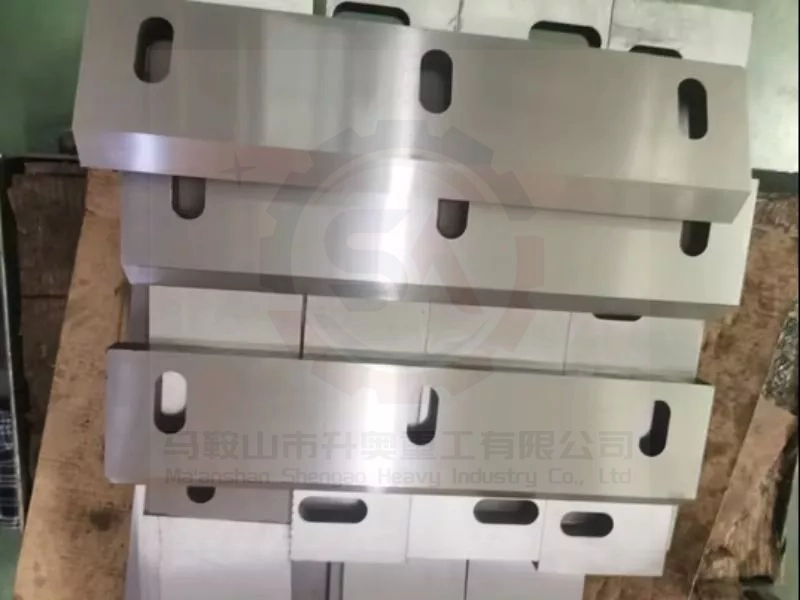
5. The Economic Angle: Total Cost of Ownership and Customization
While the upfront price of a blade is an obvious consideration, the true economic measure is its Total Cost of Ownership (TCO). This includes not only the purchase price but also the cost of energy consumed, lost production during changeovers, and the frequency of sharpening or replacement. A premium blade that lasts three times longer and cuts with 20% less energy will almost always be more economical than a cheaper blade that requires constant attention. The following table illustrates how investing in high-quality, application-matched blades impacts operational metrics:
| Performance Factor | Standard / Economy Blades | ShengAo Premium / Custom Blades |
|---|---|---|
| Typical Service Life | Baseline (1x) | 2x – 4x longer due to superior alloys and heat treatment |
| Energy Consumption | Higher amps; inefficient cutting action | Up to 25% lower energy use per ton; optimized geometry reduces drag |
| Output Consistency | Varies with blade wear; higher fines generation | Consistent particle size throughout blade life; minimal fines |
| Downtime for Maintenance | Frequent changes and adjustments | Extended intervals between sharpening; predictable wear patterns |
| Blade-to-Machine Fit | Often requires shimming; generic dimensions | Precision ground to OEM specs; guaranteed drop-in fit |
For operations processing unique materials—such as heavily contaminated post-consumer waste, high-strength engineering resins, or composites—custom-engineered blades offer the lowest TCO. By tailoring the alloy, geometry, and coating to your exact feedstock, a custom solution eliminates the compromises inherent in standard blades, delivering a rapid return on investment through increased throughput and reduced operational costs.
Conclusion: Invest in the Right Blades for Long-Term Efficiency
Selecting the right plastic granulator blades is a critical decision that impacts every facet of your recycling or processing operation—from energy bills and maintenance schedules to final product quality and profitability. By prioritizing durable materials, optimized geometry, precision manufacturing, and perfect machine compatibility, you can transform your granulator from a potential bottleneck into a reliable, high-efficiency asset. Whether you need a direct replacement for a specific machine or a completely custom-engineered solution, partnering with an experienced manufacturer like ShengAo ensures you get blades that are designed to perform. Don't settle for blades that simply fit; choose blades that are engineered to excel. Contact our team today to discuss your application and discover how our cutting solutions can drive your efficiency forward.