
What is the Best Material for Circular Blades
What is the Best Material for Circular Blades
Table of Contents
Selecting the optimal material for your circular blades is a critical decision that directly impacts cutting performance, operational costs, and production efficiency. Whether you are slicing through plastics, metals, textiles, or paper, the wrong blade material can lead to premature wear, poor cut quality, and increased downtime. This guide will demystify the most common materials used in industrial circular blades—High-Speed Steel (HSS), Tungsten Carbide Tipped (TCT), Polycrystalline Diamond (PCD), and Solid Diamond—exploring their unique properties, advantages, and ideal applications. By the end, you'll have the knowledge to choose the blade material that perfectly aligns with your specific cutting challenges and budget.
Understanding Circular Blade Requirements
Before evaluating specific materials, it's essential to understand the core demands placed on a high-performance circular blade. The right material must deliver a balance of several key attributes:
Cutting Precision & Edge Sharpness: The blade must produce clean, burr-free cuts with minimal material deformation, which is crucial in industries like packaging and precision manufacturing.
Wear Resistance & Longevity: Constant friction against abrasive materials causes wear. Superior wear resistance translates to longer intervals between sharpenings and a lower total cost of ownership.
Hardness & Toughness Balance: The material needs to be hard enough to retain its edge but tough enough to resist chipping, cracking, or breaking under impact or vibration, especially when cutting irregular or hard materials.
Heat Resistance: High-speed cutting generates significant heat. The blade material must maintain its hardness and structural integrity at elevated temperatures to avoid rapid dulling.
Corrosion Resistance: For applications involving moist materials, chemicals, or food processing, resistance to rust and corrosion is vital for maintaining hygiene and blade life. With these requirements as our benchmark, let's examine the leading materials.
Different Materials for Circular Blades
1. High-Speed Steel (HSS)
High-Speed Steel is a classic, versatile choice for a wide range of circular blade applications. It's an alloy steel known for retaining hardness at high temperatures, making it suitable for faster cutting speeds than traditional tool steels.
Pros:
Excellent all-round performance for general-purpose cutting.
Good toughness, making it less prone to chipping under shock loads.
Relatively easy to sharpen and recondition.
More cost-effective than premium materials like carbide or diamond.
Cons:
Lower wear resistance compared to carbide or diamond, requiring more frequent sharpening for abrasive materials.
Not suitable for the most demanding or highly abrasive cutting tasks.
Best for: Cutting non-abrasive materials like soft woods, textiles, rubber, certain plastics, and paper. Ideal for shops with diverse, less intensive cutting needs. Learn more about HSS blade properties.
2. Tungsten Carbide Tipped (TCT)
TCT blades feature a steel body with sharp, durable tungsten carbide segments (tips) brazed onto the edge. This combines the toughness of steel with the extreme hardness and wear resistance of carbide at the cutting point.
Pros:
Superior wear resistance and edge life compared to HSS, especially on abrasive materials.
Maintains sharpness for extended periods, reducing downtime for changes.
Offers a excellent balance of performance and cost for heavy-duty applications.
Cons:
The carbide tips are brittle and can fracture if subjected to severe impact or improper use.
Sharpening requires diamond wheels and specialized equipment.
Best for: The workhorse of industrial cutting. Excellent for hardwoods, laminated boards, composites, non-ferrous metals (aluminum, brass), and abrasive plastics. Explore our range of tungsten carbide circular blades.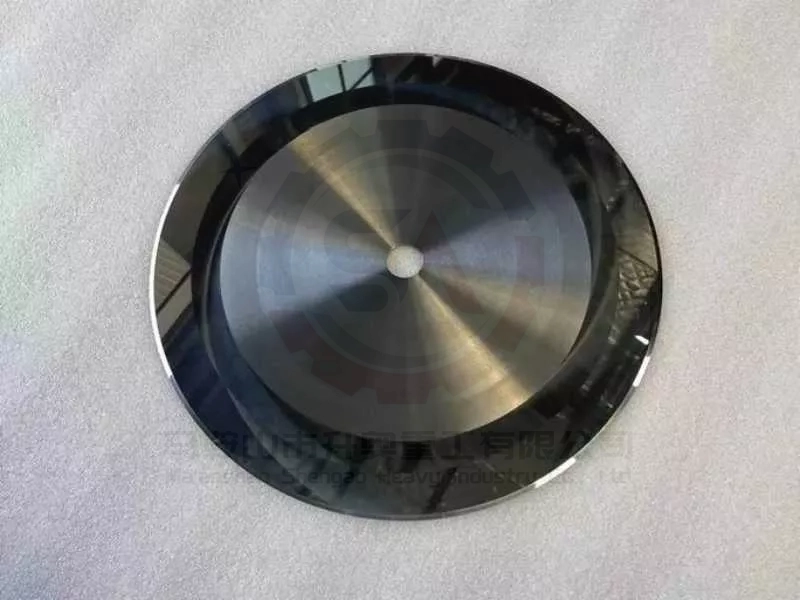
3. Polycrystalline Diamond (PCD)
PCD blades are tipped with a synthetic diamond layer that is sintered under high heat and pressure. This creates an ultra-hard, incredibly wear-resistant cutting edge that is unmatched for cutting abrasive non-metallic materials.
Pros:
Exceptional wear resistance, offering a lifespan up to 100x longer than carbide on highly abrasive materials.
Produces extremely clean, polished cuts with minimal burr.
High thermal conductivity helps dissipate heat quickly.
Cons:
High initial investment cost.
Extreme brittleness; very sensitive to shock and cannot be used on ferrous metals.
Manufacturing and sharpening are complex and expensive.
Best for: Highly abrasive non-ferrous materials like carbon fiber, fiberglass, PCB materials, advanced composites, and reinforced plastics. Also excellent for glued laminated materials.
4. Solid Diamond / Electroplated Blades
These blades have a single layer of natural or synthetic diamond grit electroplated onto a steel core. They function like ultra-aggressive grinding wheels, making them ideal for very hard, brittle materials.
Pros:
Unrivaled performance for cutting the hardest, most brittle materials like ceramics, stone, quartz, and glass.
The grinding action minimizes chipping and cracking in fragile workpieces.
Cons:
Not a "re-sharpenable" blade in the traditional sense; they are used until the diamond layer is worn away.
Not designed for cutting metals or ductile materials.
Cutting speed is generally slower than with tipped blades.
Best for: Specialized applications in the ceramic, stone, and semiconductor industries for cutting tiles, slabs, silicon wafers, and other ultra-hard, brittle substances.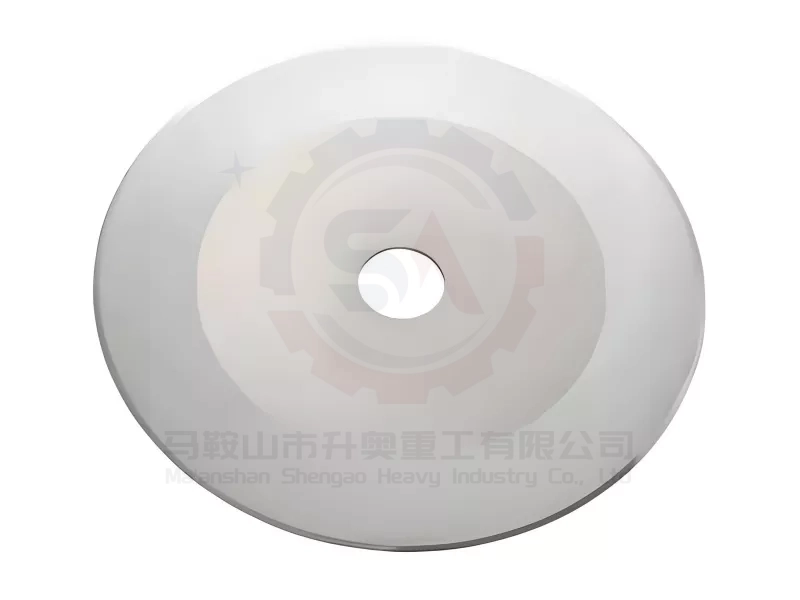
Comparison Table: Key Materials at a Glance
| Material | Wear Resistance | Toughness | Max. Cutting Speed | Relative Cost | Best For Material Type |
|---|---|---|---|---|---|
| High-Speed Steel (HSS) | Medium | High | Medium-High | $ | Soft Woods, Textiles, Rubber, Paper |
| Tungsten Carbide Tipped (TCT) | High | Medium | High | $$ | Hardwoods, Composites, Laminates, Non-Ferrous Metals |
| Polycrystalline Diamond (PCD) | Extremely High | Low (Brittle) | High | $$$$ | Carbon Fiber, Fiberglass, Reinforced Plastics |
| Solid Diamond / Electroplated | Extremely High | N/A (Grinding Action) | Low-Medium | $$$ | Ceramics, Stone, Glass, Quartz |
Factors to Consider When Choosing the Best Material
Making the final choice involves weighing several practical factors specific to your operation. For a deep dive into blade properties, our blade materials classification guide is an excellent resource.
1. Primary Material Being Cut: This is the most critical factor. Match the material's abrasiveness, hardness, and composition to the blade's strengths. Cutting carbon fiber? PCD is a must. Milling aluminum? TCT is ideal.
2. Production Volume & Machine Compatibility: High-volume operations justify the higher upfront cost of TCT or PCD blades due to their longer life and reduced changeover frequency. Ensure the blade material is suitable for your machine's power and maximum RPM.
3. Cut Quality Requirements: If you require a mirror-finish or absolutely burr-free edge (e.g., in precision packaging or papermaking), PCD or a high-quality TCT blade is necessary.
4. Total Cost of Ownership (TCO): Look beyond the purchase price. Consider the cost per linear foot of cut, which factors in blade price, lifespan, sharpening costs, and lost productivity during blade changes.
5. In-House Maintenance Capability: Can you sharpen TCT or PCD blades in-house with specialized equipment? If not, factor in the cost and turnaround time for professional sharpening services.
Conclusion
There is no single "best" material for all circular blades; the optimal choice is dictated by your specific application. For general-purpose and less abrasive tasks, HSS offers reliable performance and value. For the majority of industrial cutting challenges involving wood, laminates, and non-ferrous metals, Tungsten Carbide Tipped (TCT) blades provide the best balance of durability, cut quality, and cost-effectiveness. For extreme abrasion from materials like carbon fiber and composites, the investment in PCD blades pays off through unparalleled longevity. Finally, for hard, brittle materials like ceramics, solid diamond blades are the only effective solution.
At ShengAo, we specialize in engineering precision industrial circular blades in all these materials. Our experts can help you analyze your needs—considering the material, machine, and production goals—to recommend the perfect blade that maximizes your cutting efficiency and minimizes your operational costs. For more insights, visit our comprehensive industrial circular blade guide or contact our technical team for a personalized consultation.