
ShengAo Hot Knives for High-Speed Plastic Bag Sealing and Cutting
ShengAo Hot Knives for High-Speed Plastic Bag Sealing and Cutting
Table of Contents
- Executive Summary: Revolutionizing Packaging Efficiency
- The High-Speed Packaging Market: Demand & Dynamics
- Hot Knife Technology: Principles & Evolution
- ShengAo Hot Knives: Engineering for Excellence
- Application-Specific Performance on Key Materials
- Integration, Operation & Best Practices
- Quantifying the Economic & Operational Benefits
- Future Trends & Innovations in Thermal Sealing
- Conclusion & Selecting Your Partner
- About ShengAo Industrial Blades
Executive Summary: Revolutionizing Packaging Efficiency
In the hyper-competitive world of flexible packaging, where margins are thin and throughput is king, the sealing and cutting process represents a critical bottleneck—and a massive opportunity. Traditional mechanical methods often struggle with fraying, inconsistent seals, and excessive downtime for blade changes. Enter thermal sealing technology, specifically precision-engineered Hot Knives for Bag Making Machine systems. These tools use controlled heat to simultaneously cut and seal plastic films, producing clean, fray-free edges and hermetic seals at remarkable speeds. As a leader in precision industrial cutting tools, ShengAo has engineered a range of hot knives that are redefining performance standards for packaging manufacturers worldwide. This comprehensive guide delves into the technology, benefits, and specific applications of ShengAo Hot Knives, demonstrating how they are the pivotal component for boosting efficiency, enhancing seal quality, and driving profitability in the production of polyethylene, BOPP, and PP bags.
1 The High-Speed Packaging Market: Demand & Dynamics
The global flexible packaging market is a juggernaut, valued at over USD 260 billion and projected for steady growth. This expansion is fueled by relentless demand from e-commerce, food and beverage, pharmaceutical, and consumer goods sectors. At the heart of this production are bag making machines, whose output and reliability directly impact a manufacturer's bottom line. The final step in this process—sealing and cutting the individual bag—is where quality and speed are ultimately determined. A subpar seal leads to product waste, returns, and brand damage, while slow cutting limits overall line capacity. The industry's shift towards thinner, more complex, and sustainable film materials has further exposed the limitations of cold cutting blades, creating a pronounced need for advanced thermal solutions that can deliver consistent, high-integrity results without compromising cycle times.
The Unrelenting Drive for Efficiency & Output
Modern packaging lines are engineered for maximum velocity. Bag making machines routinely operate at speeds exceeding 200 cycles per minute. At this pace, the sealing and cutting mechanism has milliseconds to perform its function perfectly. Any hesitation, drag, or imperfection in the blade causes misfeeds, jams, or weak seals, forcing the entire line to slow down or stop. The core value proposition of a high-performance hot knife is its ability to maintain flawless performance at these extreme speeds. By melting through the film, it eliminates the friction and resistance associated with shearing, allowing for smoother operation and higher possible machine speeds. For businesses, this translates directly to more bags produced per shift, maximizing asset utilization and revenue potential.
The Imperative of Seal Integrity & Aesthetics
Beyond speed, seal quality is non-negotiable. For food packaging, a hermetic seal is critical for safety and shelf life. For retail goods, a clean, polished seal edge is a mark of quality that influences consumer perception. Traditional cutting can leave a frayed or "feathered" edge, especially on softer plastics like polyethylene. This not only looks unprofessional but can also unravel, compromising the bag's integrity. Hot knife sealing fuses the plastic layers together at the cut line, creating a solid, sealed bead that prevents unraveling and is inherently stronger. This fusion process, when controlled precisely, yields a smooth, finished edge that enhances the product's appearance and durability.
Challenges of Modern Packaging Materials
Today's packaging films are engineered for performance: high-strength LLDPE, ultra-thin BOPP for snack packaging, laminated structures with barrier layers, and even compostable biopolymers. Each material presents a unique challenge. Laminates can delaminate when cut cold. Thin films can stretch or tear. Additives can cause material build-up on blades. A universal cold blade is ill-equipped to handle this variety. ShengAo Hot Knives, however, can be precisely tuned. By adjusting the temperature profile and blade geometry to the specific material, they provide a customized solution. The heat softens the film just enough for a clean cut and immediate seal, handling everything from simple PE to complex multi-layer structures without issues like layer separation or jagged edges.

2 Hot Knife Technology: Principles & Evolution
At its core, a hot knife system is elegantly simple: a heated blade element that contacts moving plastic film. The science, however, lies in the precise control of thermal transfer. The blade is maintained at an optimal temperature—high enough to instantly melt the polymer chains upon contact, but controlled to prevent excessive melting, burning, or smoke generation. As the film passes over or under the blade, the localized heat melts a narrow path. Tension in the film then causes it to separate at this melted line, while the molten polymer from the two sides fuses together, forming an instantaneous seal. This combined cut-and-seal action in a single step is what delivers the unparalleled efficiency of the process.
Hot Knives vs. Traditional Cutting/Sealing Methods
Understanding the superiority of hot knives requires a comparison with conventional methods. Mechanical shear cutting uses two sharp blades scissoring together. This can crush or deform the film, leave burrs, and requires frequent sharpening as the edge dulls, leading to inconsistent quality and downtime. Ultrasonic sealing uses high-frequency vibrations to generate heat through friction. While effective, it can be slower, more expensive, and less suitable for very thick or temperature-sensitive materials. Hot knife technology strikes an ideal balance. It offers the speed and simplicity of a mechanical system with the clean, sealed edge of a thermal process. It has fewer moving parts than ultrasonic systems and is often more adaptable to high-speed, continuous operations.
Key Components of a Hot Knife Sealing System
A reliable hot knife sealing station is more than just the blade. It is an integrated system comprising:
The Heating Element:Often a cartridge heater inserted into the blade holder or the blade itself, capable of rapid, stable heating.
Precision Temperature Controller: A PID (Proportional-Integral-Derivative) controller that maintains the blade temperature within ±1°C, crucial for consistent results.
The Blade Holder & Assembly: A robust, thermally conductive mount that ensures even heat distribution and precise blade alignment.
The Blade Itself: The heart of the system. This is where ShengAo's expertise becomes critical. The blade must be made from a material with excellent thermal conductivity, high-temperature strength, and resistance to oxidation and plastic adhesion.
3 ShengAo Hot Knives: Engineering for Excellence
ShengAo approaches hot knife manufacturing with the same philosophy applied to its renowned industrial shredder blades and plastic granulator blades: precision engineering, premium materials, and application-specific design. A ShengAo hot knife is not a commodity heating element; it is a performance-optimized tool designed to solve the specific problems of high-speed bag making.
Advanced Material Science & Metallurgy
The choice of base material is paramount. ShengAo utilizes specialized grades of high-temperature stainless steel and nickel alloys that offer a unique combination of properties. These materials maintain their structural integrity and hardness at continuous operating temperatures often exceeding 400°C. They possess high thermal conductivity to ensure heat is quickly and evenly distributed across the entire cutting edge, eliminating cold spots that cause incomplete seals. Furthermore, they are engineered with a fine-grained structure that resists oxidation (scaling) and minimizes the adhesion of molten plastic, a common cause of performance degradation and quality issues in inferior blades.
Precision Manufacturing & Tolerances
Consistency is key in mass production. Every ShengAo hot knife is manufactured with tight tolerances, often within 0.02mm, ensuring perfect fit and alignment in the machine holder. The cutting edge is ground to a specific angle and finish—whether a straight edge for general purpose use or a specialized profile like a "fin seal" shape for specific bag types. This precision grinding ensures the heat is concentrated at the precise point of contact, allowing for a narrower, cleaner melt zone. This level of accuracy, comparable to that used in their precision industrial circular blades, guarantees that every blade performs identically, batch after batch.
Optimized Thermal Conductivity & Profile
ShengAo engineers design the blade's cross-section and mass to optimize thermal performance. The goal is to have a blade that heats up quickly, responds rapidly to controller adjustments, and maintains a stable temperature even under the cooling effect of high-speed film contact. The geometry is often designed to maximize surface area for heater contact while minimizing the mass at the cutting tip for faster thermal response. This sophisticated thermal management prevents the "overheating lag" seen in poorly designed blades, where the controller overshoots the temperature after a period of high throughput, leading to burned film.
Specialized Designs for Bag Making Machines
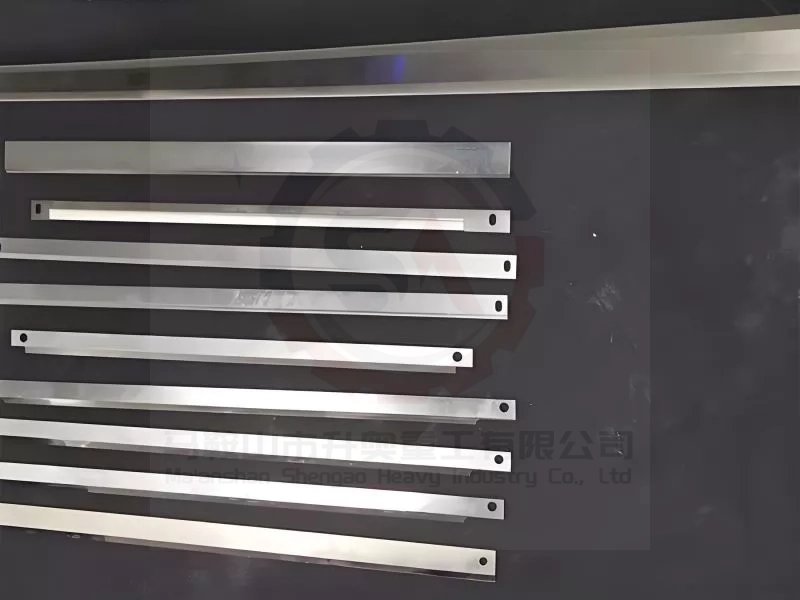
Recognizing that one size does not fit all, ShengAo offers a range of Hot Knives for Bag Making Machine configurations. This includes standard straight knives for side-seal bag machines, rotary hot knives for continuous motion systems, and custom profiles for unique applications like gusseted bags or simultaneous perforation. Their expertise in customized circular blade design translates directly to an ability to produce custom hot knife solutions for OEM machinery or to retrofit existing equipment for superior performance.
4 Application-Specific Performance on Key Materials
The true test of any hot knife is its performance on the production floor. ShengAo hot knives are engineered to excel with the most common and challenging packaging films.
Polyethylene (LDPE, HDPE) Bags
Polyethylene, particularly low-density PE (LDPE), is the workhorse of plastic bags. It has a relatively low melting point but can be sticky when molten. ShengAo hot knives for PE applications are tuned to a temperature that provides a clean, quick melt without causing the material to excessively adhere to the blade. The result is a strong, bead-like seal with a smooth, rounded edge, eliminating the "fuzzy" fray common with scissors-cut PE bags. This is crucial for T-shirt bags, grocery sacks, and garment covers.
Biaxially Oriented Polypropylene (BOPP)
BOPP is favored for its clarity, stiffness, and moisture barrier properties, making it ideal for snack, candy, and hardware packaging. It is a tougher material with a higher melting point. A hot knife for BOPP must operate at a higher temperature to achieve a clean cut without causing the film to shrink or curl at the edges. ShengAo's precise temperature control and sharp edge geometry ensure a crisp, glass-like seal that maintains the film's excellent appearance and immediately contains the product, which is often done on high-speed vertical form-fill-seal (VFFS) machines.
Polypropylene (PP) Woven Bags
Woven PP bags for rice, fertilizer, or construction materials present a unique challenge. The woven tape structure can unravel if cut with a cold blade. A hot knife melts and fuses the individual tape ends together at the cut line, effectively "welding" the edge to prevent unraveling and creating a clean, sealed hem for the sewing or sealing operation that follows. This greatly enhances the bag's durability and professional finish.
Multi-Layer Laminates & Complex Films
High-barrier packaging for coffee, chips, or medical products often uses laminates of PET, metallized film, and PE. Cold cutting can delaminate these layers. A hot knife, set to the correct temperature for the sealant layer (usually PE), cuts through all layers while simultaneously creating a fusion seal that bonds the entire laminate structure together at the edge. This prevents delamination and ensures the barrier integrity of the package is maintained right up to the seal, a critical factor for product preservation.
5 Integration, Operation & Best Practices
To unlock the full potential of a ShengAo hot knife, correct installation and operation are essential.
Integration with Bag Making Machines
ShengAo hot knives are designed to be direct replacements for existing blades in most commercial bag making equipment from manufacturers like Windmöller & Hölscher, Totani, and Hosokawa. The process involves ensuring the blade holder is clean and making good thermal contact, correctly wiring the heater cartridge to the machine's PID controller, and carefully setting the initial temperature parameters. Proper alignment parallel to the sealing jaw or anvil is critical to ensure even pressure and heat transfer across the entire cut length.
Optimal Temperature, Speed & Pressure Settings
Finding the "sweet spot" is key. As a general rule, higher line speeds require slightly higher temperatures to compensate for reduced contact time. The ideal temperature is the lowest point that produces a complete, strong seal without causing discoloration, smoke, or a hard, brittle seal bead. Pressure from the backing anvil must be sufficient to ensure good contact but not so high as to deform the blade or cause undue wear. ShengAo provides starting-point guidelines based on material type and thickness, which serve as an excellent baseline for fine-tuning on the specific production line.
Preventive Maintenance & Blade Longevity
While far more durable than cold blades, hot knives benefit from simple care. Regular cleaning with a brass brush or specialized non-abrasive plastic cleaning compound prevents carbonized plastic buildup, which can insulate the blade and cause hot spots. Periodically checking the tightness of mounting hardware and the integrity of electrical connections prevents failures. With proper care, a ShengAo hot knife can operate for thousands of production hours before requiring re-profiling or replacement, a testament to their durability akin to their long-lasting shredder blade materials.
6 Quantifying the Economic & Operational Benefits
Investing in premium hot knives from ShengAo delivers a compelling return on investment through multiple channels.
Reducing Downtime & Increasing Machine Uptime
The most significant cost in manufacturing is often unscheduled downtime. Dull cold blades require frequent stopping for changes or sharpening, halting the entire line. ShengAo hot knives, with their exceptional wear resistance and consistent performance, dramatically extend maintenance intervals. This converts directly into more productive running hours per week, increasing overall equipment effectiveness (OEE) and capacity without capital investment in new machinery.
Minimizing Material Waste & Reject Rates
Every bag with a weak seal, frayed edge, or incorrect cut is waste—waste of film, waste of labor, and waste of the energy used to produce it. The precision and consistency of ShengAo hot knives minimize these defects. The immediate sealing action also prevents product leakage during filling (for inline systems), further reducing spoilage. Lower reject rates mean higher yield from raw materials, directly improving gross margin.
Energy Efficiency & Operational Cost Savings
A well-engineered hot knife system is energy efficient. ShengAo's blades heat up quickly and maintain temperature with minimal power input due to their optimized thermal design. Compared to the constant friction and wear of mechanical cutting, which consumes motor power and requires frequent part replacement, the thermal process can be more efficient over the long run. Furthermore, the reduction in downtime saves on labor costs associated with machine adjustments and blade changes.
Calculating Your Return on Investment (ROI)
The ROI calculation is straightforward. Factor in:
Increased Revenue: More bags produced per hour due to higher possible speeds and less downtime.
Cost Savings: Reduced film waste, lower energy consumption per bag, and decreased labor for blade maintenance.
Quality Benefits: Fewer customer returns and enhanced brand reputation. For most medium-to-high-volume producers, the payback period for upgrading to ShengAo hot knives is remarkably short, often measurable in just a few months of operation.
7 Future Trends & Innovations in Thermal Sealing
The future of hot knife technology is intertwined with trends in packaging. As the industry moves towards more mono-material and recyclable film structures, the demand for precise, clean thermal sealing will grow, as these materials often rely on heat seals for integrity. Furthermore, the integration of Industry 4.0 is coming to hot knife systems. Imagine smart blades with embedded sensors that monitor temperature, wear, and performance in real-time, feeding data to a central system for predictive maintenance and optimal process control. ShengAo's commitment to R&D positions them to lead these innovations, just as they have with advanced materials for tungsten carbide shredder blades. The next generation may see composite blade materials with even higher thermal and wear properties, and geometries optimized for new, sustainable polymers.
8 Conclusion & Selecting Your Partner
In the quest for packaging efficiency, the sealing and cutting operation is a critical frontier. Hot knife technology represents a proven, superior method for achieving high-speed, high-quality results on a wide range of plastic films. Not all hot knives are created equal. The metallurgy, precision engineering, and thermal design of the blade directly dictate its performance, longevity, and the quality of the seal it produces. ShengAo brings decades of expertise in precision blade manufacturing to this field, offering hot knives that are not just tools, but performance-enhancing components for your bag making machinery. By choosing ShengAo, you invest in reduced downtime, less waste, superior seal quality, and ultimately, a stronger bottom line. For manufacturers looking to push the limits of their packaging lines, specifying ShengAo Hot Knives for Bag Making Machine systems is a strategic decision that pays continuous dividends.
About ShengAo Industrial Blades
ShengAo is a leading global manufacturer of precision industrial blades, serving the packaging, recycling, plastics processing, and paper industries. Our commitment extends beyond manufacturing to providing comprehensive cutting solutions. From our core products like circular blades and shredder blades to specialized plastic granulator blades and the hot knives detailed in this guide, every product is engineered for maximum performance, durability, and value. We support our clients with extensive technical help and documentation, ensuring optimal integration and operation. Explore our full range of solutions and discover how ShengAo can sharpen your competitive edge.
For inquiries, please contact:
Engineer Jack
Email: jack@shenaozg.com
Mobile: +86 136 9673 1068
WhatsApp: +86 152 1234 9604
Address: Bowang town Songhua River road, Bowang District, Ma'anshan City, China