
How to Choose Plastic Granulator Blades
How to Choose Plastic Granulator Blades
Table of Contents
Selecting the optimal plastic granulator blades is a critical decision that directly impacts your recycling efficiency, operational costs, and final product quality. The wrong blade can lead to premature wear, excessive energy consumption, inconsistent granule size, and costly downtime. This comprehensive guide will walk you through the key factors—from plastic type and blade material to geometry and maintenance—to help you make an informed choice that maximizes your granulator's performance and longevity.
1. Analyze Your Plastic Feedstock
The properties of the plastic you're processing dictate every other blade selection criterion. Plastics vary widely in hardness, abrasiveness, flexibility, and thermal behavior.
| Plastic Type | Key Characteristics | Blade Selection Priority |
|---|---|---|
| PET / PETE (Bottles) | Semi-crystalline, abrasive, can cause rapid wear. | High wear resistance, sharp edge retention. |
| HDPE / LDPE (Containers, Film) | Tough, flexible, can wrap around shafts. | Sharp, clean-cutting geometry to shear rather than tear. |
| PP (Polypropylene) | Lightweight, tough, moderate abrasiveness. | Good balance of toughness and wear resistance. |
| PVC (Pipes, Profiles) | Heat-sensitive, can become sticky; contains chlorine. | Corrosion-resistant materials, efficient heat dissipation. |
| ABS, Nylon, Engineering Plastics | Very hard, strong, and abrasive. | Premium high-hardness steels or carbide-tipped options. |
| Film & Fibers | Lightweight, prone to flying, can generate static. | Specialized hook or sickle geometries for positive feed and clean cutting. |
Understanding whether you are processing post-industrial scrap, post-consumer waste, or clean production purge is also vital. Contaminants like sand, glass, or metal inserts in the feedstock will necessitate more robust, impact-resistant blade materials.
2. Know Common Granulator Blade Designs
Granulator blades are typically part of a rotor assembly working in tandem with one or more stationary bed knives. The design of the rotor blades is fundamental to the machine's cutting action.
- Straight Knives (Scissor Cut): The most common design. Rotor knives pass at a slight angle against the bed knife, creating a shearing, scissor-like action. Ideal for general-purpose granulating of chunks, purgings, and thick-walled parts. Offers a good balance of efficiency and clean cut.
- Hook Knives (Sickle or Claw): Feature a curved or hooked cutting edge. This design helps grab and pull in flexible, bulky, or difficult-to-feed materials like film, fibers, or large sheets into the cutting chamber, preventing “riding” on top of the rotor. Essential for efficient film recycling.
- Staggered or V-Shaped Rotors: Instead of straight blades across the rotor width, the cutting edges are arranged in a staggered or V pattern. This reduces the instantaneous cutting force and power demand, leading to a smoother, quieter operation, suitable for large, heavy-duty or central granulators.
The number of knives on the rotor and their arrangement (e.g., 3-knife, 5-knife rotor) affects cutting frequency, throughput, and particle size distribution. Learn more about crusher and granulator blade classifications.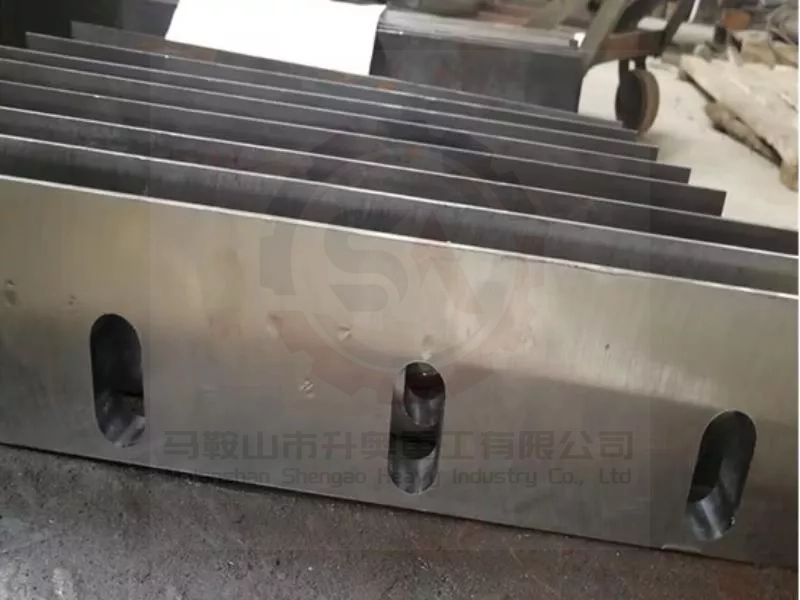
3. Selecting Blade Material and Hardness
This is where performance and longevity are forged. The material must withstand impact, resist wear from abrasion, and retain a sharp edge.
| Material | Typical Hardness (HRC) | Best For | Advantages |
|---|---|---|---|
| D2 Tool Steel | 58-62 | General-purpose recycling (HDPE, PP, ABS), post-industrial scrap. | Excellent wear resistance, good value. A industry standard. |
| SKD-11 (AISI D2 Equivalent) | 58-62 | Similar to D2; widely used for high-quality plastic granulator blades. | High carbon & chromium content for superior wear and slight corrosion resistance. |
| High-Speed Steel (HSS) - M2/M35 | 62-66 | Abrasive materials (glass-filled nylons, PET), continuous high-volume operations. | Higher hot hardness, retains sharpness under friction heat better than D2. |
| Carbide-Tipped (Tungsten Carbide) | 70+ (Carbide tip) | Extremely abrasive materials (carbon fiber, fiberglass, filled plastics), seeking maximum life. | Exceptional wear resistance, lifespan can be 5-10x longer than tool steel. |
| Stainless Steel (420, 440C) | 50-56 | Food-grade plastics, medical recycling, or where corrosion resistance is paramount. | Good corrosion resistance, easier to clean and sterilize. |
Key Tip: Harder is not always better. Extremely hard blades can be more brittle and susceptible to chipping on impact with foreign objects. The goal is to find the optimal balance between hardness (wear resistance) and toughness (impact resistance) for your specific mix of materials. Our guide on blade material classification offers deeper insights.
4. Match Blade Geometry with Your Application
Beyond the basic straight or hook design, subtle differences in the blade's geometry—its cutting angle, clearance angle, and edge preparation—fine-tune performance.
- Cutting Angle (Rake Angle): A steeper (more positive) angle creates a sharper, more aggressive cut with lower energy consumption but may dull faster. A shallower angle is stronger and more durable for heavy-duty or contaminated feed.
- Clearance Angle: Prevents the blade's heel from rubbing against the cut plastic, reducing friction and heat buildup. Proper clearance is crucial for energy efficiency and preventing material melting.
- Edge Preparation: A simple sharp edge works for many applications. For tougher plastics, a slight hone or micro-bevel can strengthen the edge and prevent premature chipping.
The geometry must be matched precisely between the rotor and bed knives to ensure a clean shear. Misalignment causes premature dulling, poor granulate quality, and increased power draw.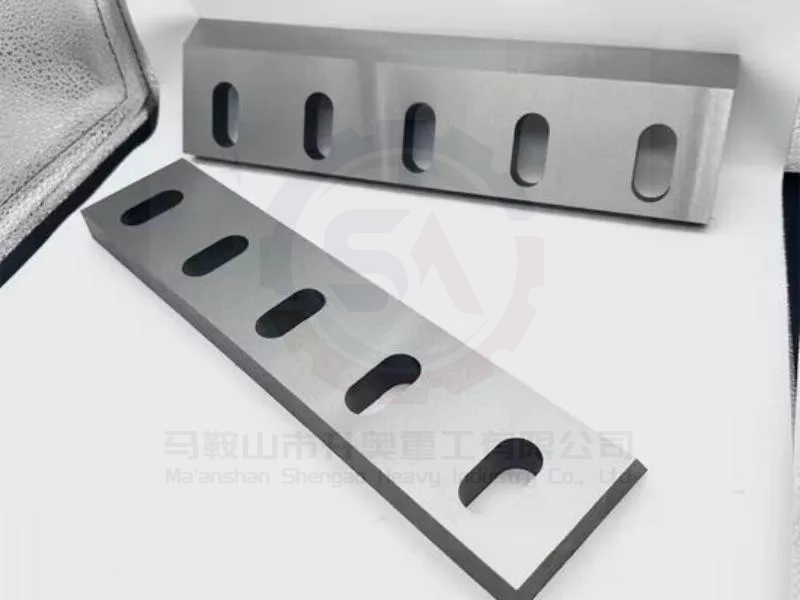
5. Factor in Pellet or Flake Size Requirements
Your target output size determines the screen size installed in the granulator, but the blade design and rotor speed work in concert with the screen.
- Fine Granules (3-5mm): Requires a screen with smaller holes. Blades must be very sharp to cleanly cut material small enough to pass through, and the rotor speed may need adjustment. Using dull blades with a fine screen leads to overheating and “smearing.”
- Medium Flakes (6-12mm): The most common range for many recycling and reprocessing lines. A well-maintained standard blade set with the appropriate screen works efficiently.
- Coarse Shred (12-25mm+): Often a first-stage size reduction. Blades can be more robust, focusing on high throughput and impact resistance rather than a perfectly uniform cut. Shredder blades might be used upstream for very large items.
Remember: The screen contains the material until it is cut small enough to escape. The right blades ensure efficient cutting at the screen interface, preventing “screen packing” and maximizing throughput.
6. Maintenance and Sharpening Best Practices
Even the best blades wear down. A proactive maintenance strategy minimizes unplanned downtime and ensures consistent product quality.
- Regular Inspection: Schedule periodic checks for nicks, dulling, or edge rounding. Listen for changes in machine sound (becoming louder or laboring) which indicate dull blades.
- Proper Sharpening: Blades must be sharpened with precision to maintain the original geometry and angles. Inconsistent sharpening ruins performance. Many operators partner with their manufacturer for professional blade restoration services.
- Balanced Sets: Always replace or sharpen rotor and bed knives as a matched set. Installing a new rotor knife against a worn bed knife will lead to immediate poor performance and damage.
- Cleaning & Handling: Keep blades clean of plastic residue. Handle with care to protect the precision edges. Proper storage is key.
7. Partner with a Specialist Blade Manufacturer
Choosing a supplier like ShengAo goes beyond purchasing a part; it's investing in a partnership for your operational success.
- Material Expertise: We help you select the ideal material grade (D2, SKD-11, HSS, Carbide) based on your plastic mix and budget.
- Precision Manufacturing: Our blades are precision-ground on state-of-the-art CNC equipment, ensuring perfect geometry, balance, and consistency for smooth, vibration-free operation.
- Customization: We provide fully customized plastic granulator blades, tailored to fit any machine model—from Rapid, Conair, and Foremost to bespoke systems—and optimized for your specific material.
- Technical Support & Services: From initial consultation and technical documentation to sharpening services and troubleshooting support, we ensure you get the longest life and best performance from your blades.
Conclusion
Choosing the right plastic granulator blade is a multidimensional decision centered on your specific material, desired output, and operational goals. By systematically analyzing your feedstock, understanding blade materials and designs, and committing to proper maintenance, you can significantly boost throughput, reduce energy and replacement costs, and produce higher-quality regrind. For optimal results, collaborate with an experienced manufacturer like ShengAo. Our engineering team can provide a tailored blade solution that turns your granulation process into a reliable, cost-effective asset for your business. Contact our experts today for a consultation.