
Best Plastic Granulator Blades for Efficient Recycling
Best Plastic Granulator Blades for Efficient Recycling
Table of Contents
1. Match Blade Material to Your Plastic Type
The foundation of any high-performance granulator blade is its material composition. The wrong steel will dull quickly, chip under impact, or fail to withstand the abrasive fillers found in many modern plastics. Your feedstock—whether soft film, rigid engineering resins, or glass‑filled compounds—dictates the optimal blade metallurgy.
Use the following guide to align blade material with your primary plastic feedstock:
| Plastic Category | Recommended Blade Material | Performance Rationale |
|---|---|---|
| Soft Film (LDPE, LLDPE, stretch film) | High‑hardness D2 / SKD‑11 tool steel (HRC 58‑62) | Maintains a keen edge to shear film without tearing; resists abrasion from adhesive residues. |
| Rigid Plastics (HDPE, PP, ABS, PS) | Through‑hardened alloy steel (HRC 56‑60) | Provides toughness to withstand impact from thick‑walled parts and consistent granulate size. |
| Engineering Plastics (Nylon, PC, POM) | High‑speed steel (HSS) or surface‑coated tool steel | Handles higher cutting forces and reduces heat buildup; coatings (e.g., TiN) prevent material adhesion. |
| Glass‑/Mineral‑Filled Plastics | Tungsten carbide tipped or high‑vanadium tool steel | Extreme wear resistance to survive highly abrasive fillers; prevents rapid edge rounding. |
| Post‑Consumer Mixed Waste | Impact‑resistant tool steel (e.g., H13 modified) | Handles unpredictable contaminants (metal, sand, stones) without chipping or catastrophic failure. |
Pro Tip: Always analyze your material for fillers or contaminants. A seemingly simple plastic stream may contain mineral reinforcements that demand premium materials. For a deeper dive into steel properties, visit our comprehensive plastic granulator blade materials guide.
2. Optimize Blade Design and Geometry for Clean Cuts
Beyond material, the blade’s geometry—cutting angle, clearance, and edge preparation—directly affects particle quality, energy consumption, and throughput. A well‑designed blade creates a true scissor cut with the bed knife, not a crushing or tearing action.
Cutting Angle & Edge Preparation: The shear angle (hook angle) determines how aggressively the blade engages the plastic. For most granulation applications, a medium hook angle (20‑30°) offers the best balance between feeding and cutting efficiency. A sharper angle may be needed for film, while a more robust edge suits thick purgings. Additionally, a precisely honed edge—micro‑bevel or polished—reduces friction and prevents material melt‑down, especially with low‑melting‑point plastics.
Rotor vs. Bed Knife Relationship: The clearance between rotating and stationary blades must be set to microns. Too wide a gap produces stringy tails and fines; too narrow risks blade contact and damage. ShengAo’s precision‑ground blades guarantee consistent clearance out of the box, as detailed on our industrial shredder blades page.
3. Ensure Precision Fit and Machine Compatibility
Even the best blade material and geometry are useless if the blade doesn’t fit your granulator perfectly. Inaccurate dimensions or poor mounting lead to vibration, uneven wear, and premature failure.
Exact Machine Specifications: Plastic granulator blades are engineered for specific machine makes and models—Cumberland, Herbold, Zerma, Weima, and many others. You must provide your machine’s model number, rotor type, and original blade part number or detailed technical drawings (length, width, thickness, hole patterns). A mismatch can cause rotor imbalance and damage to the cutting chamber.
CNC‑Ground Precision: All ShengAo blades are manufactured using advanced CNC grinding, ensuring flatness, parallelism, and dimensional accuracy within 0.02 mm. This guarantees a perfect fit and immediate, chatter‑free operation. For custom requirements, our custom granulator blade service delivers blades tailored to your exact rotor geometry.
.webp)
4. Implement a Proactive Maintenance Schedule
Waiting for blades to become completely dull is a costly mistake. A scheduled maintenance routine extends blade life, maintains consistent granulate quality, and prevents unscheduled downtime.
Regular Inspection & Rotation: Establish inspection intervals based on operating hours. Check for edge dulling, nicks, or uneven wear patterns. On multi‑blade rotors, rotate blade positions to distribute wear evenly across the set, maximizing overall life.
Timely Sharpening Practices: High‑quality blades can be sharpened multiple times. The key is to sharpen before the cutting edge degrades excessively. We provide recommended sharpening intervals and maximum material removal limits, helping you decide when to sharpen versus replace. Always sharpen with a coolant to avoid annealing the edge.
Bed Knife Maintenance: The stationary bed knife works in tandem with the rotor blades. Inspect and service it concurrently; a worn bed knife accelerates rotor blade wear and degrades cut quality. Our support page offers detailed maintenance guides and videos.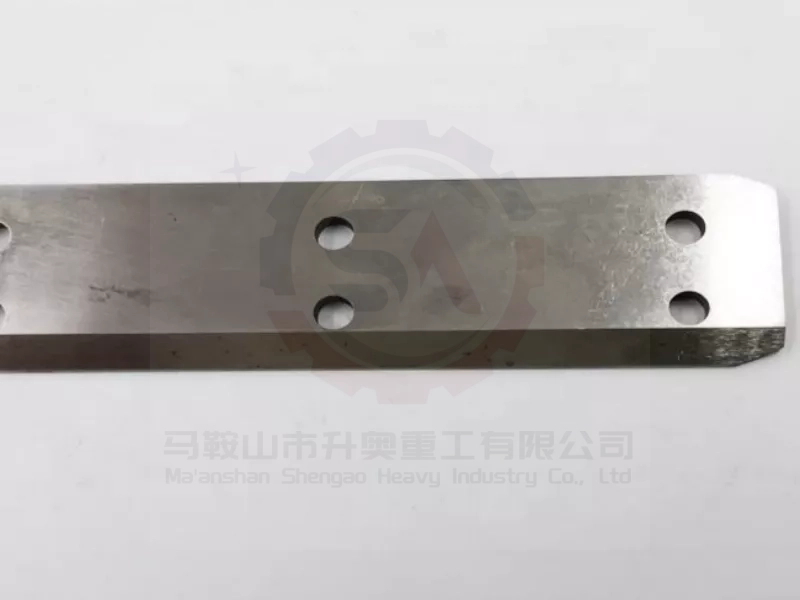
5. Analyze Total Cost of Ownership for Best ROI
The lowest purchase price rarely delivers the lowest cost per ton. To make a smart investment, evaluate the total cost of ownership (TCO)—which includes blade lifespan, maintenance frequency, energy consumption, and downtime costs.
Cost per Operating Hour: A premium ShengAo blade may have a higher upfront cost, but its extended life (often 2‑3x longer) and sustained sharpness reduce the frequency of changes and sharpening. Calculate your cost per hour or per ton of material processed for an apples‑to‑apples comparison.
Reducing Downtime & Energy: Dull blades force your granulator to work harder, increasing energy consumption and producing heat that can degrade heat‑sensitive plastics. Sharp, durable blades maintain efficiency and protect your machine’s drive components. Every unscheduled stop for blade changes costs you lost production—a cost that quality blades minimize.
Partner with ShengAo: Choosing ShengAo means more than buying a blade; it means gaining a technical partner. Our engineers provide tailored recommendations based on your machine, material, and production goals. We stand behind our products with reliable warranties and responsive support. Contact our team today to discuss your specific application and discover how the right plastic granulator blades can boost your recycling efficiency.
Conclusion
Selecting the best plastic granulator blades is a strategic decision that directly impacts your operation’s profitability. By carefully matching blade material to your plastic type, optimizing geometry, ensuring precision machine fit, adopting proactive maintenance, and analyzing total cost, you transform your granulation process into a model of efficiency and reliability. Don’t settle for less—partner with ShengAo and experience the difference that high‑performance, wear‑resistant blades make. For a custom quote or engineering consultation, contact us today.