
5 Tips for Choosing Circular Blades
5 Tips for Choosing Circular Blades
Table of Contents
Selecting the right industrial circular blades is a critical decision that directly impacts your production efficiency, product quality, and operational costs. The wrong choice can lead to frequent downtime, poor cut quality, and increased expenses. This guide provides five essential tips to help you navigate the selection process, ensuring you choose circular blades that optimize performance for your specific materials and machinery. From material compatibility to design and long-term value, these insights will empower you to make an informed decision for your cutting applications.
1. Match Circular Blades to Your Application
The foundation of selecting the right blade is a deep understanding of your cutting application. Circular blades are used across diverse industries, from papermaking and packaging to textile manufacturing and plastic recycling. The material you need to cut dictates nearly every blade specification.
Analyze Your Material's Characteristics
Consider not just the material type, but also its thickness, density, abrasiveness, and whether it's coated or laminated. For instance, cutting non-woven fabric differs significantly from slitting carbon fiber composites.
| Material Type | Key Challenges | Blade Selection Focus |
|---|---|---|
| Paper & Cardboard | Fiber abrasion, dust, maintaining a clean edge | Sharp, polished edges; materials like HSS or carbide for long runs |
| Plastics & Films | Melting, burring, static cling | Razor-sharp, sometimes coated edges; proper blade clearance |
| Metals (Foils, Thin Sheet) | Work hardening, burr formation, heat | Extreme hardness (Carbide), specialized geometries, coolants |
| Textiles & Fabrics | Fraying, slippage, layered cutting | Serrated or hollow-ground edges for grip and clean cuts |
| Composite Materials | Extreme abrasiveness, delamination | Premium wear-resistant materials like tungsten carbide |
Tip: Create a detailed profile of your primary and secondary materials. This includes tensile strength, thickness tolerance, and any additives that might increase abrasiveness. Consulting our comprehensive Industrial Circular Blade Guide can provide further clarity.
2. Ensure Blades Are Compatible with Your Machine
Even the best blade will underperform or fail if it doesn't integrate perfectly with your cutting machine. Compatibility encompasses physical dimensions, mounting systems, and operational parameters.
Verify Critical Specifications:
- Diameter and Bore Size: Must match the machine's arbor and housing clearances precisely.
- Blade Thickness (Kerf): Affects cut width, material waste, and machine power requirements.
- Mounting Method: Is it a simple bore, keyway, threaded hole, or a custom flange system?
- Maximum RPM Rating: The blade's rated speed must exceed your machine's maximum operating speed for safety.
- Machine Power and Stiffness: Heavier, larger-diameter blades require robust machinery to run smoothly without vibration.

3. Evaluate Blade Material and Manufacturing Quality
The blade material is the heart of its performance and service life. At ShengAo, we utilize a range of advanced steels and composites, each suited for specific demands.
Common Blade Materials and Their Best Uses:
| Material | Key Properties | Ideal Applications |
|---|---|---|
| High-Speed Steel (HSS) | Excellent toughness, good wear resistance, cost-effective | General-purpose cutting of paper, certain plastics, and non-abrasive materials. |
| Tool Steels (D2, M2, SKD-11) | High hardness, good wear resistance, holds an edge well | Heavy-duty cutting, plastic granulator blades, continuous production runs. |
| Tungsten Carbide | Extreme hardness & wear resistance, brittle | Abrasive materials (composites, fiberglass), long-run slitting, serrated cutting blades for tough films. |
| Carbide-Tipped | Combines a tough steel body with a carbide cutting edge | Provides excellent wear resistance at a lower cost than solid carbide; ideal for mixed-material lines. |
| Specialty Coatings (TiN, TiCN) | Reduces friction, increases hardness, resists adhesion | Sticky materials (adhesive tapes, certain plastics), extends time between sharpening. |
Look for Precision Manufacturing: Beyond material, the quality of heat treatment, grinding, and finishing determines blade consistency. A precision-ground blade ensures a uniform cutting edge, minimal runout, and vibration-free operation. Explore our Blade Materials Classification for an in-depth look.
4. Select the Right Blade Design for Your Tasks
Circular blade design goes beyond just being round. The edge geometry, bevel, and surface finish are engineered for specific cutting actions.
Understand Edge Geometries:
- Flat Edge (Knife Edge): Provides a clean, square cut. Common for slicing and shearing.
- Bevelled Edge (Single or Double): A tapered edge that shears material cleanly. Double bevels are common for center-slitting applications.
- Serrated/Toothed Edge: Designed to grip and tear materials like fabrics, rubber, or food products, preventing slippage.
- Hollow Ground (Dish Ground): The blade body is thinner than the edge, reducing friction and preventing material drag, crucial for soft or sticky substances.
Match the Design to the Cut: A guillotine blade has a very different design than a rotary cutting blade. The required sharpness angle, relief angle, and surface polish (mirror vs. satin) are all critical for achieving the desired cut quality and blade life.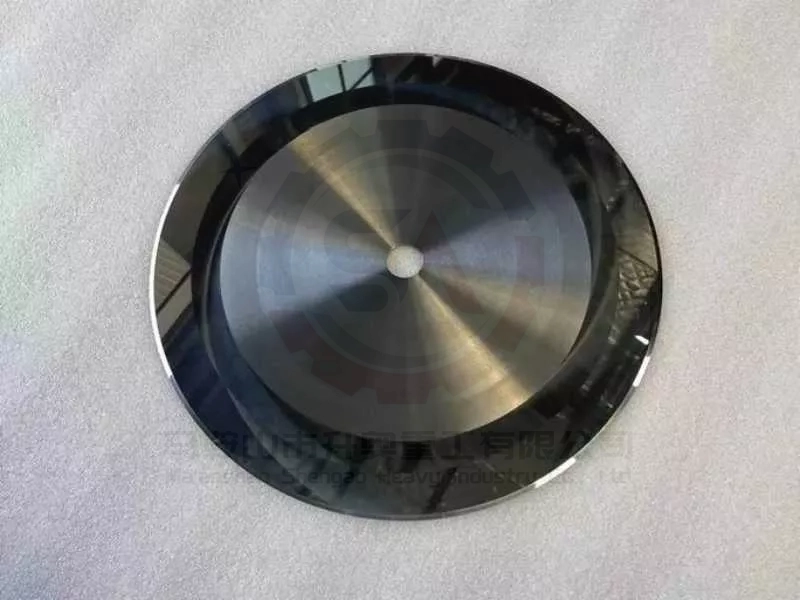
5. Balance Cost-Effectiveness with Performance and Maintenance
The cheapest blade is often the most expensive in the long run due to rapid wear, poor cut quality, and machine downtime. Evaluate the Total Cost of Ownership (TCO).
Consider Long-Term Value:
- Life Cycle: A premium carbide blade may last 10-50x longer than a standard steel blade in abrasive applications.
- Cut Quality Consistency: High-quality blades maintain their edge, reducing product waste and rework.
- Downtime for Changes: Longer blade life means fewer changeovers, increasing machine availability.
Plan for Maintenance and Support:
- Sharpening and Reconditioning: Can the blade be re-sharpened? How many times? ShengAo offers blade restoration services to maximize your investment.
- Availability of Spares: Ensure your supplier can provide replacement blades or parts promptly to avoid prolonged stoppages.
- Technical Support: Choose a manufacturer like ShengAo that offers technical help and documentation to assist with optimization and troubleshooting.
Final Thoughts
Choosing the optimal circular blade is a strategic investment in your production line's efficiency and output quality. By thoroughly understanding your application, ensuring machine compatibility, selecting the appropriate material and design, and evaluating total lifecycle costs, you can significantly enhance your operational performance. At ShengAo, we are committed to providing not just high-quality circular blades, but also the expertise to help you select the perfect tool for your needs. For personalized assistance, explore our industrial blade types or contact our team directly.